Introduction
Your VP of Sales talks about the go-to-market strategy. Your Product Manager schedules a product launch meeting. Your CEO asks about market entry plans. Three different meetings, three different terms, and everyone assumes they're talking about the same thing.
They're not.
This confusion costs real money. Teams work on different priorities. Budgets get spent on the wrong activities. You measure success with the wrong metrics. Six months later, you wonder why results fell short of expectations.
Understanding the differences between these three strategies helps you make better decisions. You'll know which approach fits your situation. You'll assign the right team members. You'll track the right metrics. Most importantly, you'll stop wasting resources on strategies that don't match your actual needs.
Here's what each term actually means. A go-to-market strategy is your complete plan for selling to customers. A product launch is the specific campaign for introducing a new product. A market entry strategy guides your expansion into new geographic markets or customer segments.
Defining Each Strategy
Go-to-Market Strategy
Your go-to-market strategy answers one fundamental question: How do you sell your product to customers?
This strategy covers everything in your commercial operation. You define your target customer and explain why they should buy from you. You set your pricing model. You choose your sales channels. You decide how marketing and sales work together. You determine which tools and processes your team needs.
The scope is broad. Your GTM strategy applies to your entire business or a major product line. It's not a one-time project. This strategy evolves as your business grows and market conditions change.
Consider a SaaS company that sells project management software. Their go-to-market strategy defines their target customer as marketing directors at companies with 100 to 500 employees. They use inside sales with a 30-day trial. Marketing generates leads through content and paid search. The sales team qualifies leads and closes deals remotely. Customer success handles onboarding and expansion.
The CMO or CRO usually owns this strategy. But they need input from product, sales, marketing, and customer success. Everyone must align on how the company goes to market.
Product Launch
A product launch is the specific event or campaign when you introduce a product to the market.
This strategy focuses on a fixed point in time. You pick a launch date. You plan promotional activities around that date. You prepare sales materials and train your team. You coordinate customer communications. You line up press coverage or partner announcements.
The scope is narrow. You're launching one product or one major feature. Everything centers on making that launch successful.
The timeline is short. You typically spend three to six months planning. The active launch period runs for a few weeks. Then you measure results and move on.
Think about a software company adding AI-powered analytics to their platform. They plan a launch campaign. They create demo videos and case studies. They train the sales team on new talking points. They host webinars to show the feature to existing customers. They send targeted emails to prospects. They coordinate with industry analysts for coverage. All of this happens around a specific launch date.
The Product Marketing Manager or Product Manager usually owns the launch. They coordinate with sales, marketing, customer success, and product teams.
Market Entry
Market entry is your strategy for entering a new geographic market or customer segment.
This strategy addresses how you adapt your business for a fundamentally different context. You research the new market to understand local needs. You localize your product for language and cultural preferences. You find distribution partners or build local teams. You navigate regulatory requirements. You adjust pricing for local purchasing power and competition.
The scope sits between GTM and product launch. You're not rebuilding your entire business model. But you're doing more than announcing a new feature. You're establishing your business in a place where you don't currently operate.
The timeline is long. Expect six to eighteen months of planning. Execution takes multiple years. You're building sustainable operations, not running a campaign.
Consider a US-based HR software company expanding into Germany. They translate the product into German. They modify features to comply with EU data protection laws. They hire a local sales team that understands German buying processes. They adjust pricing to match the European market. They set up local bank accounts and legal entities. They research which marketing channels work in Germany.
The CEO, VP of International, or Business Development lead typically owns market entry. It requires significant executive attention and cross-functional coordination.
Key Differences That Matter
Scope and Scale
The scope determines how much of your organization gets involved.
Your go-to-market strategy has the broadest scope. It touches every part of your commercial operation. Product development aligns with customer needs you've identified. Marketing creates programs to reach your target buyers. Sales builds processes to convert leads. Customer success designs onboarding for your ideal customers. Finance sets up billing systems. Everyone works within the GTM framework.
Product launches have narrow scope. The focus is one offering. The core team might include five to ten people. They coordinate with other departments, but most of the company continues normal operations.
Market entry falls in between. You adapt significant parts of your operation, but you don't rebuild everything. Your core product stays the same. Your fundamental value proposition remains. But you adjust how you package, price, sell, and support that product in the new market.
Here's a concrete example. A customer service software company expands to France. That's market entry. They need French localization, EU data hosting, and a Paris-based sales team. But they keep their core go-to-market approach of selling to customer service directors through inside sales. While expanding to France, they also launch a new chatbot feature. That's a product launch within their market entry effort, all operating under their established GTM strategy.
Resource Requirements
Each strategy demands different resources at different intensities.
Go-to-market strategy requires sustained investment. You're funding ongoing operations across sales, marketing, and product. A mid-sized B2B software company might spend $3 million annually on sales and marketing within their GTM strategy. This spending continues year after year, adjusted for growth and optimization.
Product launches need concentrated bursts of resources. You might allocate $50,000 to $200,000 for a major product launch. This covers campaign creation, sales enablement materials, promotional activities, and event costs. You spend this budget over two to three months. Then it's done.
Market entry requires heavy upfront investment followed by ongoing local operations. Entering a new country might cost $500,000 to $2 million in the first year. This covers market research, legal setup, localization, initial hiring, and launch activities. After that, you're funding a local office with its own budget.
Team size varies accordingly. Your GTM strategy might involve 50 people across sales and marketing. A product launch might have a core team of eight people working part-time for three months. Market entry might require hiring 10 to 15 local employees in the first year.
Success Metrics
Tracking the wrong metrics leads to false conclusions about performance.
Go-to-market strategies use long-term business metrics. You track revenue growth, customer acquisition cost, customer lifetime value, and market share. You measure sales cycle length and win rates. You monitor customer retention and expansion revenue. These metrics show whether your fundamental approach to selling is working.
Product launches use adoption and awareness metrics. You track how many customers activate the new feature. You measure press mentions and social media engagement. You count qualified leads generated by launch activities. You assess how quickly sales reps start including the product in their pitches. These metrics show whether your launch created the intended impact.
Market entry strategies use local performance metrics. You measure market penetration rates in the new geography. You track local revenue growth. You calculate time to profitability in the new market. You monitor customer acquisition costs compared to your home market. You assess brand awareness in the new region. These metrics show whether you're successfully establishing a presence.
Consider a company that treats their go-to-market problem like a product launch problem. Sales have been flat for six months. Instead of examining their GTM strategy, they launch new features constantly. They measure launch metrics like feature adoption. Those metrics look good, but revenue stays flat. They're tracking the wrong thing. The problem isn't product features. It's their fundamental approach to finding and closing customers.
Timeline and Iteration
Each strategy operates on a different time scale.
Go-to-market strategy is continuous. You build it, execute it, measure results, and refine it. Most companies review their GTM strategy quarterly. They make adjustments based on what's working and what's not. They might pivot more dramatically once a year. But the work never stops. Your GTM evolves with your business.
Product launches have fixed endpoints. You plan for three months. You execute for four weeks. You measure results for one month. Then you move to the next launch. You do a post-mortem to capture lessons, but that specific launch is complete.
Market entry uses a phased approach. You research for three months. You set up legal and operational infrastructure for six months. You launch with a small team and test your approach for six months. You scale based on early results over the next year. Each market entry follows this pattern, but they don't repeat on a fixed schedule.
The way each strategy handles failure differs too. If your GTM strategy isn't working, you iterate and improve. You don't abandon it completely unless something fundamental has changed. If a product launch underperforms, you learn lessons but you've already moved on to the next product priority. If market entry fails, you might exit that market entirely. The stakes and commitment levels are different.
Companies get in trouble when they confuse these timelines. They treat their ongoing GTM strategy like a one-time launch. They execute a campaign and expect it to solve everything. Six months later, they're surprised nothing has changed. Or they treat a product launch like a continuous GTM effort, dedicating resources far beyond what the launch merits.
When You Need Each Strategy
You Need a Go-to-Market Strategy When
You need to develop or revise your GTM strategy in specific situations.
If you're starting a new company, you need a GTM strategy before anything else. You can't sell effectively without defining who you're selling to, how you'll reach them, and how you'll convert them to customers.
If you're changing your business model, you need a new GTM approach. A services company moving to a product model can't use the same sales and marketing approach. A company moving from perpetual licenses to subscriptions needs different metrics, processes, and team structures.
If you're targeting a completely different customer profile, you need GTM work. A company that sold to IT directors now selling to CFOs needs different messaging, different channels, and different sales processes. The buyers have different priorities and buying behaviors.
If sales have plateaued and incremental improvements aren't working, you likely have a GTM problem. When you've optimized your current approach and still can't grow, something fundamental needs to change.
If your teams lack coherence, your GTM strategy is probably unclear. Marketing generates leads that sales can't close. Product builds features that don't align with your positioning. Pricing doesn't match your value proposition. These disconnects signal that you need to define or clarify your strategy.
Here's a detailed example. A B2B software company spent five years selling to enterprise clients. They had field sales reps, six-month sales cycles, and $100,000 average contract values. Revenue grew but margins were tight. They decided to target mid-market companies instead. This required a completely new GTM strategy. They moved to inside sales. They shortened the sales cycle to 30 days. They dropped prices to $20,000 annually. They shifted from field events to digital marketing. They rebuilt their sales process, compensation plans, and marketing programs. This wasn't a product launch or market entry. It was a fundamental change in how they go to market.
Red flags that indicate you need GTM work: Sales and marketing blame each other for poor results. Your value proposition doesn't resonate with prospects. You can't clearly articulate who your target customer is. Deals take much longer than expected to close. Your pricing feels arbitrary.
If you skip GTM work when you need it, everything else becomes harder. Product launches fail because you're targeting the wrong buyers. Market entry struggles because you're adapting a flawed model. Teams work hard but pull in different directions.
You Need a Product Launch Strategy When
Product launches make sense in specific scenarios.
You need a launch strategy when releasing a new product or major feature. Something significant enough that customers need to hear about it. Something that could influence buying decisions or generate competitive advantage.
You need a launch when rebranding or repositioning an existing product. You're not changing the product itself, but you're changing how you talk about it or who you sell it to. The market needs to understand this change.
You need a launch when responding to a competitive threat with a new offering. If a competitor just released something that threatens your position, a well-executed launch helps you fight back quickly.
You need a launch strategy if your product roadmap includes regular customer-facing releases. Not every release requires a major launch, but the significant ones need coordinated efforts.
You need a launch when you need to generate buzz and pipeline quickly. Maybe you're entering a busy season. Maybe you need to hit quarterly targets. A strong product launch can create momentum.
Here's a detailed example. A web-based accounting platform decides to add a mobile app. This is their first mobile offering. They plan a launch campaign. They create a landing page and demo videos. They train the sales team to position mobile access as a key differentiator. They run a beta program with 50 customers and gather testimonials. They coordinate with the App Store for featuring. They send announcement emails to all customers. They create social media content. They host a webinar showing mobile features. They offer an early adopter discount for the first month. They line up customer interviews with tech publications. All of this happens over eight weeks around the app release date.
A common mistake is launching without proper enablement. The product ships, marketing sends emails, but the sales team doesn't know how to sell it. Customer success doesn't know how to support it. The launch creates awareness but not actual adoption or revenue.
Another mistake is treating every release like a major launch. You exhaust your team and train customers to ignore your announcements. Save launch efforts for features that truly matter to customers and differentiate your product.
You Need a Market Entry Strategy When
Market entry strategies apply to specific expansion scenarios.
You need market entry strategy when expanding to a new country or region. Different languages, cultures, regulations, and business practices require adapted approaches.
You need it when entering a new vertical or industry. A company that sells to technology companies entering the healthcare market faces different compliance requirements, buying processes, and customer expectations.
You need it when moving from B2C to B2B or vice versa. The entire sales model changes. B2C companies entering B2B need to build sales teams and longer nurture processes. B2B companies entering B2C need to master paid acquisition and self-service models.
You need it when regulatory requirements differ significantly in the new market. Financial services, healthcare, and data privacy regulations vary dramatically by geography and industry.
You need it when your current market is saturated. If you've captured most of your addressable market and need new growth, entering new markets becomes necessary.
Here's a detailed example. A cloud-based project management tool has strong US market share. They decide to enter the healthcare vertical. This requires a market entry strategy, not just a product launch. They research healthcare-specific requirements. They add HIPAA compliance features. They hire salespeople with healthcare industry experience. They create case studies from healthcare pilot customers. They adjust messaging to address healthcare workflows. They attend healthcare IT conferences instead of general business events. They partner with healthcare consultants who can recommend their tool. They price based on healthcare market norms, not their standard pricing. This takes 18 months and requires dedicated team members.
Before committing to market entry, assess several risk factors. Can you afford the upfront investment? Do you have executive attention to dedicate to this expansion? Is the new market large enough to justify the effort? Can you adapt your product for local requirements? Do you understand local competition?
Companies fail at market entry when they simply copy their existing approach. They assume what worked in their home market will work everywhere. They underestimate cultural differences. They ignore regulatory requirements. They don't hire local expertise. Six months in, they've spent significant money with little to show for it.
How These Strategies Work Together
The Hierarchy
These three strategies aren't interchangeable options. They have a hierarchy.
Your go-to-market strategy is the foundation. It defines your fundamental approach to selling. Everything else builds on top of this foundation.
Market entry adapts your GTM strategy for a new context. You're not creating a completely new way to sell. You're modifying your existing approach for different markets. Your core GTM principles remain, but you adjust for local conditions.
Product launches execute within your GTM framework. You use your established channels, messaging approaches, and sales processes to introduce new offerings. The launch amplifies your existing GTM strategy.
Think of it like building a house. Your GTM strategy is the foundation and frame. Market entry is adding a new wing to the house. Product launches are the furniture and decorations inside. You can't add a wing without a solid foundation. You can't arrange furniture without rooms to put it in.
A company with a strong GTM strategy can launch products successfully in multiple markets. The GTM foundation makes both market entry and product launches more effective.
Problems arise when you reverse this hierarchy. Companies launch products hoping that will solve GTM problems. It doesn't work. You're decorating a house with a cracked foundation. Companies enter new markets before establishing a working GTM strategy in their home market. They export their problems to new geographies.
Real-World Integration Example
Let's follow one company through all three strategies to see how they work together.
The company is a mid-sized marketing automation platform with 200 employees and $30 million in annual revenue. Here's how they used all three strategies over 18 months.
Their established GTM strategy targets marketing directors at companies with 100 to 500 employees. They sell through inside sales with a 30-day free trial. Marketing generates leads through content marketing, paid search, and industry events. The average deal size is $18,000 annually with a 45-day sales cycle. They've been executing this strategy for three years with consistent 40% year-over-year growth.
They decide to expand from the US to the UK market. This is market entry. They spend three months researching the UK market. They discover that UK buyers prefer annual contracts over monthly subscriptions. They find that GDPR compliance is a bigger concern than in the US. They learn that UK marketing directors attend different events and read different publications.
They hire a UK country manager in month four. They set up a legal entity and open a London office in month six. They hire three UK-based sales reps in month seven. They create UK-specific case studies and localize their website for British English and currency. They adjust their paid search campaigns for UK search behavior. They sponsor UK marketing conferences.
Their GTM strategy stays the same: target marketing directors, use inside sales, offer free trials. But they adapt it: UK sales reps, UK pricing in pounds, UK-focused content, local events. The market entry takes their working GTM model and adjusts it for the UK context.
Six months into UK operations, they launch a new email template builder. This is a product launch. They create this feature for all customers, both US and UK. They plan a coordinated launch campaign. They create demo videos, update their website, train both US and UK sales teams, send announcement emails, host webinars in different time zones, and offer a promotion for the first 100 customers who adopt the feature.
The product launch happens within both their US GTM operations and their UK market entry. The same feature gets promoted through their established channels in the US and their new channels in the UK. The launch strategy is consistent, but it executes through different market operations.
Here's how their timeline overlapped. Months 1-3: UK market research while maintaining US GTM and planning email builder feature. Months 4-6: UK legal setup and hiring while executing US GTM and building email feature. Months 7-9: UK sales team onboarding while executing US GTM and preparing product launch. Months 10-12: Product launch in both markets while scaling UK operations and maintaining US GTM. Months 13-18: Optimizing UK GTM adaptation while continuing US operations and measuring product launch results.
Resource allocation across all three: $2.5 million annual budget for US GTM operations. $800,000 for UK market entry in year one. $150,000 for email builder product launch.
Results after 18 months: US revenue grew 38%, slightly below their usual 40% because some leadership attention went to UK expansion. UK revenue reached $2.3 million with a path to $5 million in year two. The email template builder was adopted by 42% of customers and became a key differentiator in new sales. UK customer acquisition cost was 60% higher than US in year one, but the UK team expects this gap to close as they optimize local operations.
Key lessons: They maintained their core GTM strategy instead of creating something completely new for the UK. This saved time and leveraged their existing knowledge. They waited until UK operations were stable before launching a major new product. This prevented team overload. They hired a dedicated UK leader instead of managing UK expansion from the US. This gave the market entry effort proper attention.
What they would do differently: Start UK market research three months earlier. The legal setup took longer than expected and delayed hiring. Invest more in UK-specific content before launching sales efforts. The sales team needed more localized materials. Stagger the product launch by one quarter so it didn't overlap with peak UK sales hiring season.
Common Mistakes and How to Avoid Them
Mistake 1: Using Launch Tactics for GTM Problems
This is one of the most common and expensive mistakes.
Here's how it happens. Sales are flat. The executive team panics. They decide they need new products to spark growth. They launch new features every month. Each launch includes email campaigns, webinars, and sales training. Marketing is exhausted. Sales reps are confused about what to pitch. Customers feel overwhelmed by constant changes.
Six months later, sales are still flat. The company has launched eight new features. None of them moved revenue significantly. The problem wasn't product features. It was their fundamental GTM approach. They were targeting the wrong buyers, using ineffective channels, or failing to communicate clear value.
Why this fails: Product launches can't fix GTM problems. If your core approach to finding and converting customers doesn't work, new features won't help. You're putting new furniture in a house with a cracked foundation.
What to do instead: Audit your GTM strategy before building new products. Talk to customers about why they buy or don't buy. Analyze your sales process for where deals stall. Evaluate whether you're targeting the right buyers. Assess whether your pricing matches your value. Fix the foundation before you add new features.
A specific example: A CRM software company saw sales decline for two quarters. They responded by launching integrations with 15 new apps. They spent $200,000 on launch campaigns. Sales continued declining. They finally did customer research and discovered their ideal customer profile had changed. Mid-market companies now wanted simpler tools, not more integrations. They revised their GTM strategy to target this need. They simplified their product and repositioned their messaging. Sales recovered within one quarter. The launches had been wasted effort.
Mistake 2: Entering Markets Without Adapting GTM
Companies often treat market entry as a simple copy-paste operation.
Here's the mistake: A company succeeds in the US using a specific sales model. They decide to expand to Europe. They hire a few European sales reps. They translate their website. They send the reps to conferences. They expect similar results to the US.
It doesn't work. European buyers have different expectations. The sales cycle is longer. The decision-making process involves more stakeholders. Procurement processes are more formal. The marketing channels that worked in the US don't work in Europe. After a year and $1 million spent, they have minimal revenue to show for it.
Why this fails: Market conditions vary dramatically by geography. Buying behaviors differ. Regulatory requirements differ. Competitive landscapes differ. Marketing channels differ. Simply executing your existing GTM playbook in a new location ignores these realities.
What to do instead: Treat market entry as GTM adaptation, not duplication. Research the new market thoroughly. Understand local buying processes. Identify which elements of your GTM strategy need to change and which can stay the same. Hire local experts who understand the market. Test and iterate your approach based on local feedback.
A specific example: A US-based HR software company expanded to Germany. They initially tried to use their US inside sales model with remote demos and 30-day trials. German companies expected in-person meetings and formal proposals. The US approach generated almost no meetings. They hired a German sales director who rebuilt their approach. They added field sales for Germany. They created formal RFP response templates. They attended German HR conferences. They adjusted pricing to match German market expectations. Within six months, their adapted approach started generating consistent revenue.
Mistake 3: Confusing Strategy Owners
Unclear ownership creates confusion and poor execution.
Here's what happens: The product team thinks they own the GTM strategy because they define the product. The sales team thinks they own it because they talk to customers. Marketing thinks they own it because they generate demand. Everyone works on their own version. Nothing aligns.
Or the sales team gets put in charge of product launches. They focus entirely on near-term deals and ignore long-term market positioning. The launch generates some immediate pipeline but fails to build lasting product awareness.
Or product managers get tasked with market entry strategy. They focus on localizing features but ignore sales channel development, pricing strategy, and marketing approach. The product is ready but the company can't sell it effectively in the new market.
Why this fails: Different strategies require different expertise. GTM strategy needs commercial expertise and cross-functional coordination. Product launches need product marketing skills and project management. Market entry needs local market knowledge and operational setup capabilities. Wrong ownership means wrong priorities and missing elements.
What to do instead: Assign clear ownership with explicit decision rights. Create an organizational structure that matches strategy types. For GTM strategy: CMO or CRO owns it with a cross-functional strategy team. For product launches: Product Marketing Manager owns it with input from product, sales, and marketing. For market entry: VP of International or dedicated market leader owns it with support from all functions.
Document who owns what decisions. The GTM owner decides on target customers, positioning, and channel strategy. The product launch owner decides on launch timing, messaging, and promotional tactics. The market entry owner decides on local operations, partnerships, and market-specific adaptations.
Mistake 4: Wrong Success Metrics
Measuring the wrong things leads to bad decisions.
Here's the problem: A company launches a new product feature. They measure success using GTM metrics like overall revenue growth and customer acquisition cost. The feature performs well with existing customers but doesn't drive much new customer acquisition. They see flat revenue numbers and declare the launch a failure. They cut investment in that product area.
Actually, the launch succeeded at its goal: increasing value for existing customers and reducing churn. But they measured it against the wrong benchmark.
Or a company enters a new market and expects immediate profitability. They measure the new market against their mature home market metrics. The new market shows higher customer acquisition costs and longer sales cycles. They panic and consider exiting. But these metrics are normal for market entry. They needed to track market penetration and local brand building instead.
Why this fails: Each strategy type has different goals and different timelines. Measuring a short-term product launch with long-term GTM metrics makes the launch look ineffective. Measuring a long-term market entry with short-term launch metrics makes it look like a failure.
What to do instead: Match your metrics to your strategy type and timeline. For GTM strategy, track: monthly recurring revenue, customer acquisition cost, customer lifetime value, win rates, average deal size, sales cycle length. Review these quarterly and expect gradual improvement. For product launches, track: feature adoption rate, time to first use, customer feedback scores, press mentions, pipeline influenced, sales enablement completion. Review these weekly during the launch and monthly after. For market entry, track: local market awareness, local revenue growth, time to first deal, local customer acquisition cost versus home market, number of local partnerships, regulatory compliance completion. Review these monthly and expect 12-18 months before strong performance.
Create dashboards specific to each strategy. Your GTM dashboard shows business health metrics. Your launch dashboard shows adoption and awareness metrics. Your market entry dashboard shows local establishment metrics. Don't mix them up.
Conclusion and Next Steps
The core difference between these three strategies comes down to scope, timeline, and purpose.
Your go-to-market strategy defines how you sell across your entire business. It's ongoing and requires continuous optimization. Product launches introduce specific offerings through coordinated campaigns with fixed timelines. Market entry adapts your approach for new geographies or customer segments over multiple years.
Use these questions to determine which strategy you need right now:
Do you lack a clear, shared understanding of who you sell to and how? You need GTM strategy work.
Are you releasing a significant new product or feature that could influence buying decisions? You need a product launch strategy.
Are you expanding to a new country, region, or industry vertical with different requirements? You need a market entry strategy.
Most companies need all three at different times. The key is knowing which one addresses your current challenge. Don't try to do everything at once. Spreading resources across multiple major initiatives usually means all of them underperform.
Here's how to prioritize: If you're an early-stage company or sales have plateaued, start with GTM strategy. Get your foundation right. If you have a working GTM strategy and need to maintain competitive position, focus on product launches. If you have a strong GTM strategy in your current market and need new growth sources, consider market entry.
Your specific next steps depend on which strategy you need:
If you need GTM work: Start with customer interviews. Talk to 20 customers about why they bought from you. Talk to 10 prospects who didn't buy about why they chose competitors. Analyze your sales data to identify patterns in your most successful deals. Map your current customer journey from awareness to purchase. Identify gaps and disconnects. Bring your leadership team together to align on target customers and value proposition.
If you need launch support: Build a cross-functional launch team with clear roles. Create a launch timeline working backward from your target date. Develop your launch goals and success metrics. Create a launch checklist covering product readiness, sales enablement, customer communication, and promotional activities. Assign owners to each element. Hold weekly launch meetings to track progress.
If you need market entry support: Start with market research. Understand market size, competition, regulatory requirements, and buying behaviors in your target market. Talk to potential customers in that market. Identify local experts or advisors who can guide your approach. Develop a business case including investment requirements and expected returns. Determine whether you'll use local employees, partners, or remote teams. Create a phased plan starting with research, moving to pilot operations, then scaling.
Clear strategy names lead to clear execution. When everyone understands whether you're working on GTM strategy, executing a product launch, or entering a new market, they know what success looks like. They know what timeline to expect. They know which metrics matter. They know who makes which decisions.
Stop using these terms interchangeably. The precision will improve your results.
Need help with your GTM strategy?
If you have doubts about your GTM plan and need help crafting one with the best chances for success, we at RINNEPARTNERS have been doing just that for the past 20 years. Our focus is mostly on companies entering European markets from across the world, whether that's from the US to UK, Sweden to Germany, China to France, we'll be able to help you. Contact us here and let's see if there's potential for cooperation.
If you're wondering if your company is even ready to expand internationally...
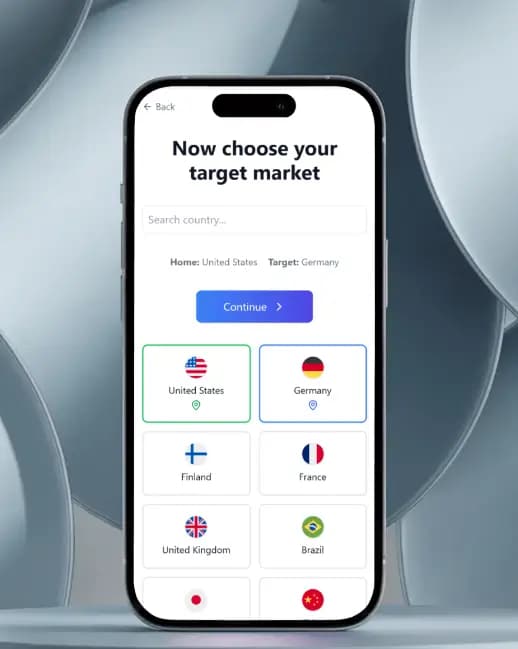
We created a quiz game for companies to find out if they're ready. You only need to pick your home market, target market, answer a generic questions about your company (don't worry, all anonymous), and questions about market entry and it'll give you an answer about your company's readiness to expand. It takes only 5 minutes to complete but could save you years and a lot of money. Give it a try here!